Wednesday, August 5, 2015

American History 101: Washington Square Park in Philadelphia

Philadelphia has been much in the news lately, and not for a good reason... sorry HitchBOT.  But no matter what the City of Brotherly Love does to hitchhiking robots, it is certainly one of the most historic cities in the United States.  Everyone knows about Benjamin Franklin, Independence Hall and the Liberty Bell... but what about the city itself?  The architecture and design?  These are very historic -- and they have a story!  

In 1682, Philadelphia was founded by William Penn as the capital of the Pennsylvania Colony.  It was initially designed to be a city that was easy to traverse, with roads that travel in a straight pattern from north to south and east to west.  It was designed with the idea that residents would be separated by open space that would increase their quality of life, and help prevent the spread of fires.  The early plans had the Delaware and Schuylkill Rivers as city boundaries that contained five large, square parks.  Four in the corners, and one in the center.  These parks no longer represent the corners of the city, but they hold a great deal of the history of the city.  This post is about one of those parks, Washington Square park.

Northeast entrance to Washington Square Park

Washington Square Park sits in between the posh Society Hill and Washington Square West neighborhoods.  It was initially designated as the southeast corner of the city, and sits at 6.4 acres in size.  And as such, has seen a great deal of history that pre-dates the Revolutionary War.  In the 18th century, the park was known for being grazed by the local animals within the city.  But more-so, it was one of the main burial sites for the African community of Philadelphia, and as a potter's field.  A potter's field is an area that is used for pauper's graves.  And to continue the tradition, during the American Revolution, it was used as a burial ground for local citizens and Colonial soldiers.

After the Revolutionary War, the city was hit with a serious Yellow Fever epidemic.  Between August 1 and November 9, 1793 over 5,000 people are listed as having died of Yellow Fever.  This represents over 10% of the population of the city, making it one of the worst epidemics in the history of the United States.   And another 20,000 people fled Philadelphia before the frost of late October killed off the mosquitos and put a halt to the spread of the disease.  In 1793, with nowhere else to bury them, victims of the epidemic were interred in what is now known as Washington Square Park.

In the years after Yellow Fever, the square was used to hold cattle markets and camp meetings until about 1815 when the city went through a maturation, and the neighborhoods surrounding the park became a bit wealthier.  In 1825, the park was officially named Washington Square Park in honor of the founding father of the nation.  Initially, a monument to George Washington was proposed, but never built.  It does serve as the framework for the current monument in the park.

At one time, between the end of the Civil War and mid-20th century, the area around the park served as a hot bed for publishing companies.  Companies such as Curtis Publishing Company, J.B. Lippincott, W.B. Saunders, Lea & Febiger, the Farm Journal and George T. Bisel Company.  The Bisel Company is the sole remaining publisher on the square, and has been there since 1872.  In addition, when the Walnut Street Prison was across the street, the side that faced 6th Street was known as "Lawyers Row".


In 1954, the Washington Square Planning Committee finally acted on the idea of a statue in the park.  But instead of a simple statue of George Washington, they designed and built a monument.  The monument was dedicated to all of the unknown dead soldiers and sailors of the Revolutionary War and designated the "Tomb of the Unknown Revolutionary War Soldier."  It includes a bronze cast of Houdon's statue of George Washington in front of a wall that reads:


Freedom is a light for which many men have died in darkness.
In unmarked graves within this square lie thousands of unknown soldiers of Washington's army who died of wounds and sickness during the Revolutionary War.

The independence and liberty you possess are a work of the joint councils and joint efforts or common dangers, suffering and success.  -- Washington's Farewell Address, Sept. 17, 1796

The Tomb of the Unknown Revolutionary War Soldier
The Tomb includes remains which were disinterred, after archeological examination, from within the park when it was a cemetary.  The remains are that of a soldier, although it is unknown if the soldier was Colonial or British.  There were so many buried in Washington Square over the decades, it is unknown exactly how many bodies remain buried beneath the square and the much newer surrounding neighborhoods.  Even today, bodies are unearthed occasionally during construction or maintenance projects.

One more historical note about Washington Square Park, there is a sycamore tree that was planted in 1975 from seeds that were carried to the moon by astronaut Stuart Roosa on Apollo 14.  It is called The Moon Tree.  Today, the park is part of the National Park Service and attached to the Independence National Historic Park.

Washington Square Park is also prominently featured in my novel, Philadelphia Story.


~~~~
Bruce holds a degree in Computer Science from Temple University, a Graduate Certificate in Biblical History from Liberty University and is working towards a Masters Degree in American History at American Public University.  He has worked in educational and technology for over 18 years, specializes in building infrastructures for schools that work to support the mission of technology in education in the classroom.  He also has served as a classroom teacher in Computer Science, History and English classes.  


Bruce is the author of five books: Sands of TimeTowering Pines Volume One:Room 509The Star of ChristmasPhiladelphia Story: A Lance Carter Detective Novel and The Insider's Story: A Lance Carter Detective Novel -- with a new book, Learn the Basics: Digital Forensics, due soon. 

Follow Bruce's Novel releases by subscribing to his FREE newsletter!

Be sure to check out Bruce's Allentown Education Examiner Page, his Twitter and his Facebook!

Saturday, August 1, 2015

American History 101: Origins of American Slang from the War


“All service men whether in khaki, blue, or field green are speaking a fresh and vigorous tongue these days, one all their own. What does this new language imply? Some might say: ‘Not much.’ But perhaps they don’t know their history. The new language means a lot. It indicates that all men are united by the words they speak. So the welding value of a fighter’s jargon is nothing to sneeze at.”
Fighting Talk, by Francis Raymond Meyer, 1942
G.I. Janes 

War invariably births a culture all its own, and with it, a new language. Men are thrown together in close-knit, often boring, sometimes dangerous situations, and the slang they beget is both a product, and a reinforcer, of their camaraderie. Wartime slang creates an “us” vs. “them” dynamic — where them is not only the enemy, but the civilian population back home who cannot fully access the world of the fighting man.

Because of its scale, no war inspired more new slang than World War II. Thousands of new words and phrases were birthed during the Big One, and getting acquainted with them offers a fascinating and often humorous soldier’s-eye-view of the conflict.


Paul Dickson, author of War Slang: American Fighting Words and Phrases Since the Civil War, writes that “wars create great bodies of language that sound as different as do a musket, a M-1, and a Patriot missile.” Yet while the color changes, the subjects that come in for the slang-treatment are fairly timeless: the hardship of missing a girl back home, the risks of mingling with women on the front, the necessity of facing death (often with gallows humor), and of course, the terrible food. Men with jobs far from the action, as well as those in the field who don’t contribute to the esprit de corps — self-important egoists, suck-ups, lazy loafers, and conversational narcissists — earn an abundance of nicknames as well. Finally, chaplains have long been on the receiving end of both ribbing and affection, garnering for themselves a slew of both teasing and endearing monikers.


Below you’ll find just a sampling of the colorful slang used during WWII. Some of the words were around in previous wars, but were revived and popularized during the Big One. Others were brand new phrases, born on the European and Pacific fronts. A good portion of the slang made its way into civilian culture, and continues to be used today, particularly among Greatest Generation grandparents, and even their children.  Some of the slang is of course salty fare, and includes terms now considered derogatory -- but keep in mind the time and conditions in which these fantastically artistic use of the language were created!

World War II Slang From the Front


Ack-Ack. Anti-aircraft fire.
Admiral of the Swiss Navy. A self-important person.
Ammo. Ammunition.
All-Out. With full vigor, determination, or enthusiasm.
Armed to the Teeth. Well equipped with firearms; alert; fully prepared; awake to danger.
Armored Cow. Canned milk. Variations: Armored Heifer; Canned Cow.
Army Banjo. Shovel.
Army Chicken. Franks and beans.
Army Strawberries. Prunes.
Asparagus Stick. A submarine’s periscope.
Asthma. The company wit, so-called because he’s full of wheezes (jokes).
AWOL. Absence without official leave.
Awkward Squad. Men who require extra instruction at drill.
Axle Grease. Butter.
BAM. A “broad-assed Marine” (i.e., a female Marine).
Baby. Mustard; from its resemblance to that which comes out of the hind end of an infant.
B-ache/bellyache. To complain.
Bags of Mystery. Sausages.
Bail Out. Parachute jump from plane; by extension, to get out of a situation like a date.
Baptized by Fire. To have been under enemy fire for the first time; to have received one’s first wounds.
Bath Tub. Motorcycle sidecar.
Battery Acid. Artificial lemonade powder included in K-rations — considered undrinkable and regularly discarded or used as cleaning solution.
Battle Breakfast. A Navy term referring to the heavy breakfast of steak and eggs commonly given to sailors and Marines on the morning of a combat operation.
Battle Watch. To do one’s best under difficult circumstances.
Bayonet Course. Hospital treatment for venereal diseases. “Bayonet” refers to the male member.
Beachhead. A beach where invading forces land; a fortified position on a beach.
Beat Your Gums. To talk a lot about something. Variations: Gumming; Jawing; Chin Music.
Become a Gold Star in Mom’s Window. A gentle way of saying killed in action.
Bedpan Commando. Medical corpsman.
Behavior Report. Letter to a girl back home.
Belly Cousin. A man who has slept with a woman you slept with.
Bite the Dust. Killed or wounded.
Blanket Drill. A nap.
Blind Flying. A date with a girl you have never seen.
Blister Foot. Infantryman.
Blister Mechanic. Hospital corpsman.
Blow It Out Your Barracks Bag! Shut up! Go to Hell!
Body Snatcher. Stretcher bearer.
Bone. To study.
Borrowed Brass. False courage inspired by drugs or drink. Variations: Bought Guts; Drugstore Nerve.
Bottled Sunshine. Beer.
Broad With a Heat Wave. Passionate woman; women with a venereal disease.
Broad With a Load of Lettuce. A woman of wealth.
Broad With Canned Goods. A virgin.
Brown-noser. Ass-kisser. To curry favor, or “boot-lick.” Variation: Brownie.
Brush-Off Club. Men in the armed forces who have been dumped by their girlfriends. Variation: The Ex-Darling Club.
BTO. Big Time Operator — someone who thinks he’s important.
Buck Private. The lowest rank in the Army.
Bug Juice. Insect repellent.
Bunk Lizard. A lazy solider with a sloth-like attraction to his bed. Variation: Sack Rat.
Burn and Turn. Game of blackjack.
Canned Morale. A movie.
Cash in One’s Chips. To die.
Cast-Iron Bathtub. Battleship.
Cast the Last Anchor. To die.
Cat’s Beer. Milk.
Chair-Borne Infantry. Desk workers.
Chatterbox. Machine gun.
Check Out. To be killed; to die.
Chicken Berry. An egg.
Chicken Shit. The G.I.’s name for service regulations and the seemingly endless make-work chores. Sometimes abbreviated as C.S.
Chow Hound. Men who always wind up at the head of the mess line.
Table Muscle. Fat.
Cit. A civilian; from “citizen”
Civvies. Civilian clothing.
Coffee Cooler. One who seeks easy jobs; a loafer.
Collision Mats. Pancakes or waffles.
Completely Cheesed. Bored to an extreme.
Cooking With Gas. Having become wise to something.
Cool as a Cucumber. Alert and aware; self-possessed; calm.
Cool Hand. One who is cool as a cucumber.
Corner Turner. A deserter.
Cracked Egg. A silly or stupid person.
Crumb Up. To get a haircut, shoeshine, freshly pressed shirt, etc., in preparation for an inspection.
Cupid’s Itch. Any venereal disease.
Dad. The oldest member of a group.
Dead Battery. An irritable or gloomy person; a pessimist.
Dead Nuts On. Fond of; in love with.
Dear John. A letter from one’s wife or sweetheart informing one that the relationship is over.
Devil Beater. Chaplain.
Devil Dogs of the Sea. The Marines.
Devil’s Piano. A machine gun.
Devil’s Voice. A bugle call.
Dirty Gertie of Bizerte. A promiscuous woman.
Do a Hitch. To serve an enlistment.
Do One’s Bit. To serve in the military in time of war; to engage in war work.
Dogface. Infantryman.
Dog Food. Corned beef hash.
Dog Show. Foot inspection.
Dog Tags. Two metal identification tags worn around the neck, one to be collected and one to be left with the body after death.
Do-Re-Mi. Money.
Downhill. The second half of an army enlistment.
Duck Soup. An easy task.
Dude Up. To dress in one’s best uniform.
Eager Beaver. A soldier is so anxious to impress his superiors that he volunteers for every job that’s offered, or otherwise displays unusual diligence.
Eagle Day. Payday; also known as “the day the eagle shits.” A reference to the American eagle that appears on some coins.
Ear Beater. A person who doesn’t let you get a word in edgewise.
Egg in Your Beer. Too much of a good thing.
Eight Ball. A solider who gets into trouble so much that he’s a liability to his unit; from the old notion that it is bad luck to be behind the eight ball in pocket billiards.
Eisenhower Jacket. A short, fitted, belted jacket of the type made popular by General Dwight D. Eisenhower during the war.
Emily Posters. Naval cadets; so-called because they were given a condensed edition of an etiquette book by Emily Post.
File 13. Wastebasket.
Flak. Abbreviated form of German word Fliegerabwehrkanone, or “pilot warding-off cannon” (anti-aircraft fire).
Flyboy. A glamorous pilot (usually used ironically).
FUBAR. Fouled (or fucked) up beyond all recognition.
Garbage Catcher. A metal mess tray with eight depressions in which food is served.
Gasoline Cowboy. Member of the armored division (usually a tank driver).
Gertrude. An office clerk.
Get-Alongs. Legs.
Get Cracking. To get started; to get into the air. Borrowed from the British RAF.
G.I. Government Issue; an enlisted soldier. “Being G.I.” means doing only what is authorized and not wishing to take any risks.
Gibson Girl. A hand-cranked radio transmitter included in aircraft life rafts; so-called because of its wasp-waisted shape, reminiscent of the beautiful, idealized women drawn by Charles D. Gibson.
G.I. Jane. A member of the Women’s Army Corps. Variations: G.I. Jill and G.I Josephine
G.I. Jesus. Chaplain.
G.I. Joe. A soldier.
Gink. A stupid person.
Ginkus. A contrivance; a thingumajig.
Give It the Deep Six. Forget it; keep it a secret. From older naval slang for burial at sea, which was known as “the deep six,” probably from the custom of burying people six feet underground.
Good-Time Charley. A person given to carousing; a generous person.
Grandma Gear. Low gear.
Gravel Agitator. Infantryman.
Guardhouse/Barracks Lawyer. A person who knows little but talks much about regulations, military law, and “soldier’s rights.”
Ham That Didn’t Pass Its Physical. Spam, the "meat" which was served to soldiers up to 2-3 times per day.
Hashburner. Cook.
Hangar Warrior. An airplane mechanic who boasts about what he would do if he were a pilot.
Haywire. Used to describe a piece of equipment that was not behaving itself, or an event that took a bad turn. Derived from the use of haywire (baling wire) to make farm repairs.
Hubba, Hubba! An exclamation of approbation, thrill, or enthusiasm by a man for a woman.
Jane. A Woman.
Jane-Crazy. Over fond of women.
Jap. Japanese person; anything Japanese.
Jawbreakers. Army biscuits.
Jeep. A small, low, khaki-colored car in general use in the Army.
Jeepable. Impassable except by a jeep (said of a rough road).
Jerry. A German; anything German.
Joe. Coffee.
“Joe Blow” Biography. A short biographical article featuring a fighting man, written for publication in a hometown newspaper.
Juice. Electricity.
Juice Jerker. Electrician.
Just Sweating Member. Pending or prospective member of the Brush-Off Club; he doesn’t know where the hell he stands but the mail doesn’t bring in “Sugar Reports” any longer.
Khaki-Whacky. A woman overly fond of men in uniform.
Knucklebuster. Crescent wrench.
Kraut. A German; from “sauerkraut.”
Latrine Rumors. Unfounded reports
Lay an Egg. Drop a bomb.
Looseners. Prunes.
Low on Amps and Voltage. Lacking ambition and ideas.
Mae West. An inflatable life jacket that fit around the neck and down the chest, and bulged the chest when inflated. -- named for the singer who bore the same name and was known for her small waist and large bust.
Maggie’s Drawers. Red flag used on the rifle range to indicate a miss; as in, “He fired a full clip but all he got was Maggie’s drawers.”
Mickey Mouse Movies. Instructional films on personal hygiene.
Mickey Mouse Rules. Petty rules, regulations, and red tape.
Million Dollar Wound. A wound that took a soldier out of combat, and even perhaps back to the US for treatment, but did not permanently cripple or maim him.
Misery Pipe. Bugle.
Moo Juice. Milk.
Monkey Clothes. Full dress uniform.
Mousetrap. Submarine.
Mud Eater. Infantryman.
Ninety-Day Wonder. An officer who holds a commission by virtue of having attended a three-months course direct from civilian life.
Nip. A Japanese person. Short for “Nippon” — a reading of the Japanese word for Japan.
Nut Buster. Mechanic.
O.A.O. One-and-only (as in “one-and-only-girl”).
Padre. The chaplain.
Paragraph Trooper. A member of the “Chair-Borne Infantry.”
Pecker Checker. A medical person who checks for evidence of venereal disease.
Peep (Son of a Jeep). Bantam car, used in organizations in which jeep is applied to larger vehicles.
Penguin. Air Force service member who doesn’t fly.
Pep Tire. A doughnut.
Pig Snout. A gas mask.
Pineapple. A hand grenade.
Pinup. A picture of a woman for a soldier to pin up on the wall of his quarters.
Podunk. A soldier’s hometown.
Pocket lettuce. Paper money.
Popsey/Popsie. Girlfriend.
Popsicle. Motorcycle.
P.S. Man. One with previous military experience; one with a previous term of enlistment.
Put That in Your Mess Kit! Think it over.
Ratzy. A German; a blend of “rat” and “Nazi.”
Reg’lar. Regular; first-rate; excellent; a regular soldier.
Retread. A veteran of World War I fighting in World War II.
Ribbon Happy. Dazzled by one’s own decorations.
Rock-Happy. Bored, especially on the rocky islands and atolls of the Pacific.
Roger! Expression used instead of okay or right.
Rootin’, Tootin’ Son of a Gun. An energetic person.
Rookie. A recruit.
Royal Order of Whale Bangers. An “exclusive” club open only to airmen who have mistakenly dropped depth charges on whales, supposing them to be enemy submarines.
Sandpaper the Anchor. To do unnecessary work.
Saltwater Cowboy. Marine.
Sea Dust. Salt.
See the Chaplain. Stop grousing; resign yourself to an unpleasant situation. In other words, I don’t care about your problem. Go tell someone who’s paid to care.
Serum. Intoxicating beverages.
Shack Man. Married man.
Shingles. Toast.
Shit on a Shingle. Chipped or creamed beef on toast. Abbreviated as S.O.S.
Short Arm. Penis.
Short Circuit Between the Ear Phones. Mental lapse.
Shrapnel. Grape-Nuts.
Shutters. Sleeping pills.
Side Arms. Cream and sugar for coffee.
Sin Buster. Chaplain.
Six-and-Twenty Tootsie. A girl who makes a flying cadet so heedless of time that he returns late from weekend leave, thereby incurring six demerits and twenty punishment tours.
Sky Scout. Chaplain.
Snafu. Situation normal, all fouled (or fucked) up.
Snore Sack. Sleeping Bag.
S.O.L. Shit out of luck; often sanitized as “sure out of luck” or “soldier out of luck.”
Son of Mars. A soldier.
Soul Aviator. Chaplain.
Soup. Clouds, rain, and most of all, fog.
Spud Duty. Kitchen police (K.P.) assignment (i.e., peeling potatoes).
Spuds with the Bark On. Unpeeled potatoes.
Stinkeroo. Poor in quality; low grade.
Stripe-Happy. A soldier too eager for promotion.
Sugar Report. A letter from a girl.
Suicide Squad. Those who operate a machine gun under fire.
Superman Drawers. Woolen underwear.
Superman Suit. Long, one-piece government-issue underwear.
Swacked. Intoxicated.
Sweat Something Out. Wait a long time for something.
That’s All She Wrote. That’s all; a customary cry of the company mail clerk at the end of the mail call.
That’s for the Birds. Nonsense, drivel, irrelevant matter.
Thousand-Yard-Stare. Name given to the look of a man with a combat-harrowed psyche.
Tiger Meat. Beef.
Tin Pickle. A torpedo or submarine.
T.N.T. Today, not tomorrow.
Torpedo Figure. A woman with a good figure.
Tough Row of Buttons to Shine. A hard job.
T.S. Tough situation! Tough shit! In other words, don’t be discouraged because of hard luck.
T.S. Slip. When a soldier’s complaints become unbearable, his listeners frequently tell him to fill out a “T.S. Slip” and send it to the chaplain.
Uncle Sam’s Party. Payday.
U.S.O. Commando. Hometown hero.
Valley Forge. Temporary tent city in cold weather.
Walkie-Talkie. Portable radio receiving and sending apparatus. Variations: Handie-Talkie, and Spam Can Radio, after its similarity to a can of Spam.
Walrus. One who cannot swim.
Wash Out. To be eliminated from flight training.
Wilco. Will comply. This radio code was used throughout the services and taken up by civilians. “Roger — wilco,” means “Okay — I’ll do it.”
Zombie. A soldier falling in the lowest category in the Army classification test.

-- terms taken from Paul Dickson's 
War Slang: American Fighting Words and Phrases Since the Civil War, and Gordon Rottman's FUBAR: Soldier Slang of WWII.

~~~~
Bruce holds a degree in Computer Science from Temple University, a Graduate Certificate in Biblical History from Liberty University and is working a Master Degree in American History at American Public University.  He has worked in educational and technology for over 18 years, specializes in building infrastructures for schools that work to support the mission of technology in education in the classroom.  He also has served as a classroom teacher in Computer Science, History and English classes.  


Bruce is the author of five books: Sands of TimeTowering Pines Volume One:Room 509The Star of ChristmasPhiladelphia Story: A Lance Carter Detective Novel and The Insider's Story: A Lance Carter Detective Novel -- with a new book, Learn the Basics: Digital Forensics, due soon. 

Follow Bruce's Novel releases by subscribing to his FREE newsletter!

Be sure to check out Bruce's Allentown Education Examiner Page, his Twitter and his Facebook!

Thursday, July 23, 2015

American History 101: Ulysses S. Grant

Ulysses S. Grant is one of the famous military figures in American history... period.  Not only was he the 18th President of the United States, but he is credited with picking up a sagging Union Army and leading it to victory over the Confederates and accepting the surrender of Robert E. Lee and his Army of Northern Virginia at Appomattox Courthouse on April 9th, 1865.  Grant died in 1885 from throat cancer.  But everyone knows these things... but here are a few things about the great General that you may not know.

Ulysses S. Grant had a middle name... it was Ulysses.
Everyone always called him Ulysses, but that was his middle name.  His given name was Hiram Ulysses Grant.  He
became Ulysses S. Grant when Ohio Congressman Thomas Hamer nominated him to West Point as Ulysses S. Grant through a clerical error.  Grant is said to have made every attempt to fix the typo, but the name persisted and he eventually just accepted it.

Without the military, Grant was lost and poor.
Even though we think of him as a great military leader today, his personal and business affairs were anything but "great".  After serving with some distinction in the Mexican-American War, Grant resigned his post in 1854.  He spent the next seven years bouncing between being a farmer, real estate agent and collecting rent in buildings.  He even had to sell firewood on street corners for a time, just to make some money.  When the Civil War began, Grant was working in his family's leather business.  After he left the White House, he once again sunk into abject poverty when a business partner stole money from investors and left him bankrupt.

Grant didn't start off a winner -- but won the first big victory.
Grant wasn't just given a field command when he jumped back into the uniform in 1861.  But by the beginning of 1862, he lucked into the command of a ragtag bunch of Illinois volunteers, and within weeks was promoted to Brigadier General.  And the, in February of 1862, his aggressive battle field style forced the surrender of 15,000 Confederate soldiers at Fort Denelson in Tennessee.  This was the first unconditional surrender of an entire Confederate force.  This is also the battle in which his reputation for smoking cigars during battle was born.

Everyone has demons... alcohol was Grant's.
It was not uncommon for 19th century American men to drink... to excess.  Alcoholism was, and would become an national epidemic into the early 20th century, which led to Prohibition.  Ulysses S. Grant was no exception, in fact, he was a full blown alcoholic.  It is thought that in 1854 he was forced to resign from the army for being caught drunk while on duty.  He swore off alcohol after this incident, but the Civil War brought it all back again.  It was no secret that Grant was a binge drinker, however his adjutant, Colonel John Rawlins was not in favor of drinking and often was able to keep Grant straight.  That being said, rumors swirled and persisted claiming that Grant would often ride into battle three sheets to the wind.  Alcohol would plague Grant until his death.

Grant prevented Robert E. Lee from being charged with treason
Upon accepting the surrender of Robert E. Lee and the Army of Northern Virginia on April 9th, 1865, Grant offered generous terms.  The terms paroled Confederate soldiers and officers, allowing them to return to their homes.  He also allowed then to keep their horses and mules for use on their farms.  Grant believed that leniency was the key to creating an environment of peace, and the future of the country.  He was outraged when a federal grand jury later threw out the terms of the agreement and charged Lee, along with sever other generals, with treason.  Grant met with President Johnson and told him in no uncertain terms that he would resign his command rather than execute any order to arrest Lee and his generals.  President Johnson forced the grand jury to drop the cases in order to preserve General Grant's support.

Grant took down the KKK.
During reconstruction, the Ku Klux Klan began murdering and terrorizing blacks throughout America.  The late-1860's was a time of growth for the KKK.  President Grant pushed the Justice Department to bring thousands of indictments against the KKK and its leaders.  In 1871, he pushed the so-called "Ku Klux Klan Act", which gave him the power to declare martial law and suspend habeas corpus in areas that he said were in a "state of insurrection".  And in late 1871, Grant sent troops into South Carolina and ran out thousands of Klansmen.  His aggressive handling of the KKK is credited with pushing the Klan into relative obscurity in subsequent years.  They would then resurface after 1910.

~~~~
Bruce holds a degree in Computer Science from Temple University, a Graduate Certificate in Biblical History from Liberty University and is working a Master Degree in American History at American Public University.  He has worked in educational and technology for over 18 years, specializes in building infrastructures for schools that work to support the mission of technology in education in the classroom.  He also has served as a classroom teacher in Computer Science, History and English classes.  


Bruce is the author of five books: Sands of TimeTowering Pines Volume One:Room 509The Star of ChristmasPhiladelphia Story: A Lance Carter Detective Novel and The Insider's Story: A Lance Carter Detective Novel -- with a new book, Learn the Basics: Digital Forensics, due soon. 

Follow Bruce's Novel releases by subscribing to his FREE newsletter!

Be sure to check out Bruce's Allentown Education Examiner Page, his Twitter and his Facebook!


Sunday, July 5, 2015

American History 101: The Hot Dog - Happy Independence Day America!

Is there any food that is considered more American than the Hot Dog?  I suppose you could make an argument for the Apple Pie, but from where I sit -- there is no food more synonymous with America itself than the stuffed sausage variant we call: Hot Dog.

But where did it come from?  Why is it so popular?  And where did it get that funny name?


The Hot Dog Today
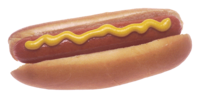
The Hot Dog as we know it today is a cooked sausage that we, traditionally, grill, steam or boil.  We then take that cylindrical combination of meat (or meat like products depending on who made your dog) and throw it in between a sliced bun.  Is it done?  Heck no it isn't!  The toppings for your hot dog are as individual as American culture itself.  While your basic hot dog gets a yellow mustard on top, some folks like to mix it up and use spicy brown, or a honey mustard.  And others like to add ketchup, relish, sauerkraut, onions, pickles, mayonnaise, or chili to their dog.  And placement is important to Americans, too.  Some throw it on top, some love it in between the sides of the bun and the dog, while others enjoy it on the bun first with the hot dog placed loving on top.  

Are their variants to the hot dog?  Of course there are!  Heard of the corn dog?  And what about cocktail weenies, baked hot dogs and the recently more popular deep fried hot dog.  The deep fried dog can be done solo, or battered with the bun.  It is clear that as Americans, out hot dogs are a unique, varied and free as we are!

Where Did the Hot Dog Come From?
The hot dog is a variant of the sausages that came over to America from Germany.  The roots of the dog can be traced back to the German Frankfurter sausage, which itself has three different variants: the Wurstel, Wurschten and Rindswurst.  These are all packaged in a similar manner but with a differing set of ingredients.  These small sausages were used to celebrate everything in Germany as early as the 13th century and gained popularity because of their rich flavors, and ease of portability.

After these wonders of portable-meat-happiness came over to America, it didn't take long before someone thought they'd be great to start selling to the masses.  In the 1870's, German immigrant Charles Feltman is credited as one of (if not the) first to being selling link style sausages rolls to patrons in Coney Island.  Others soon followed suit, including Bavarian immigrant Antoine Feuchtwanger, who allegedly pioneered the practice in the mid-west, garnerng popularity selling them in hot dog stands in St. Louis.  The legend goes that Feuchtwanger used to sell them without a bun initially, and instead would give his customers gloves so they would not burn their hands.  It was only when he began to lose money when customers did not return the gloves that his wife suggested he use a roll instead.  And then during the World's Fair in 1893 held in Chicago, Feuchtwanger was there to serve these hot sausage treats, complete with buns, to the world's travelers who then took the idea how with them to countries all over the globe.

But it was German immigrant Chris von der Ahe who is credited with bringing America's two early loves together.  von der Ahe was the owner of the St. Louis Browns and an Amusement park, and he saw the protential of this portable meat in both settings.  Taking off this idea, Harry Stevens took the idea to a whole new level when he began bringing the sausage into the stands at the ball games, walking through the crowds yelling, "Red Hots!  Get your Red Hots right here!" and the combination of sitting, watching a ball game and consuming a hot sausage finally came together as one.  It is thought that at this time, when asked what these tasty treats were called by a New York Post
 reporter, Stewart told him "red hot daschund sandwiches" -- unfortunately, the reporter seemed unable to spell daschund, published a cartoon showing the food in the Post, he called them "hot dogs".  And from there, the name and popularity took off.


They were being sold on street corners, restaurants and cafe's all over the country by this time -- and remain that way today.  But there was a concern about the "quality" of the hot dog during this early time period, which existed before FDA regulation.  That was when a Polish-American worked of Feltman's went into business to compete with Feltman.  His idea was to was that all his employees would wear white surgical aprons to give the impression that his hot dogs were clean and pure.  His name was Nathan Handwerker, and his hot dogs were called Nathan's Famous.  He also undercut the pricing of his former employer by charging only five cents per dog, while a Feltman dog was ten.  The combination of the high quality meat, lower price and perception of cleanliness quickly catapulted Nathan's Famous to a high level of popularity.


What *is* a Hot Dog?
The basic hot dog is pretty standard.  A meat, or combination of meats, is encased in a clear casing and pre-cooked before being heated and eaten.  A commonly accepted naming convention is that "wieners" tend to be pork based and have a more even flavoring, while "franks" tend to be beef based and have a more robust seasoning to them.  Both are still encased in a natural casing.  The pork varieties tend to be made from meat trimmings and are mixed with flavorings and seasoning to give them a solid flavor, while beef varieties tend to be more pure beef -- but can

also be mixed with meat trimmings and heavy seasonings for flavor.  And these days, there are also chicken, turkey and vegetarian options out there in the popular link form.  

As with most sausages, hot dogs must be encased to be cooked.  These natural casings are usually made our of a sheep's small intestines that give the firm sausage its "snap", and on-rush of seasoned flavoring when you take that first bite.  This does cause an issue with "Kosher" hot dogs, and since these types of casings can be very expensive, Kosher hot dogs tend to be made via what is called a "skinless" cookie process.  This process features a cellulose based encasement instead of the intestine, and is removed before being packages.

Whether you like your hot dog with yellow mustard, or love it lathered with chili, cheese, onions and relish -- it is clear that all of America loves this tasty, meaty treat as much as we love freedom itself!  So on this Independence Day weekend, enjoy a hot dog -- the way you love it most.  Me?  I love it every way possible -- I'm likely to be seen with up to 3 hot dogs at a time... one with sauerkraut and spicy mustard; another with spicy mustard, ketchup and relish and still another with onions, chili and mustard!


Happy Independence Day America!  And remember, freedom and liberty isn't just about eating hot dogs.  It is about having your voice heard, living your life in the most productive way possible and working together in your community to ensure everyone has the same opportunities that you strive for every day.  I rarely get overly political in this space, but I encourage you to check out the links below and consider supporting the causes that exist to help enable freedom, and liberty for everyone.

Our America Initiative for open Presidential Debates
Open Ballot Access Now for fair ballot access for all political candidates

Every Voice Center for publicly funding elections, taking corporate money out of national election.


~~~~
Bruce holds a degree in Computer Science from Temple University, a Graduate Certificate in Biblical History from Liberty University and is working a Master Degree in American History at American Public University.  He has worked in educational and technology for over 18 years, specializes in building infrastructures for schools that work to support the mission of technology in education in the classroom.  He also has served as a classroom teacher in Computer Science, History and English classes.  


Bruce is the author of five books: Sands of TimeTowering Pines Volume One:Room 509The Star of ChristmasPhiladelphia Story: A Lance Carter Detective Novel and The Insider's Story: A Lance Carter Detective Novel -- with a new book, Learn the Basics: Digital Forensics, due soon. 

Follow Bruce's Novel releases by subscribing to his FREE newsletter!

Be sure to check out Bruce's Allentown Education Examiner Page, his Twitter and his Facebook!